
— How We Work
From Shipping Lane
to Living Room
A complete journey through how we transform retired maritime containers into handcrafted furniture — preserving every mark, weld, and story along the way.
— The Raw Materials
Every Part Has a Purpose
A standard 20-foot shipping container contains over 2,300 kg of steel, hardwood flooring, and precision hardware. We use every component — nothing goes to waste.
Corrugated Wall Panels
~180 kg per panelUsed for: Chair backs, table bases, decorative panels
Distinctive ribbed texture, natural patina from sea air exposure
Corner Castings
~4 kg eachUsed for: Table legs, stool bases, structural joints
Precisely engineered, heavy-duty cast iron with ISO markings
Floor Planks (Bamboo/Hardwood)
~25 kg per sectionUsed for: Table tops, seat surfaces, shelving
Worn smooth by decades of cargo, rich grain visible
Structural Beams (Cross-members)
~15 kg per beamUsed for: Table frames, bench supports, shelving brackets
Heavy-gauge steel with welded joints, industrial character
Door Hardware & Locking Bars
~3-8 kgUsed for: Decorative handles, coat hooks, towel rails
Functional industrial design, chrome or painted steel
Roof Panels
~120 kg per sectionUsed for: Tabletops, wall art, room dividers
Flatter surface than walls, often with interesting staining patterns
— The Journey
Six Steps to a
Finished Piece
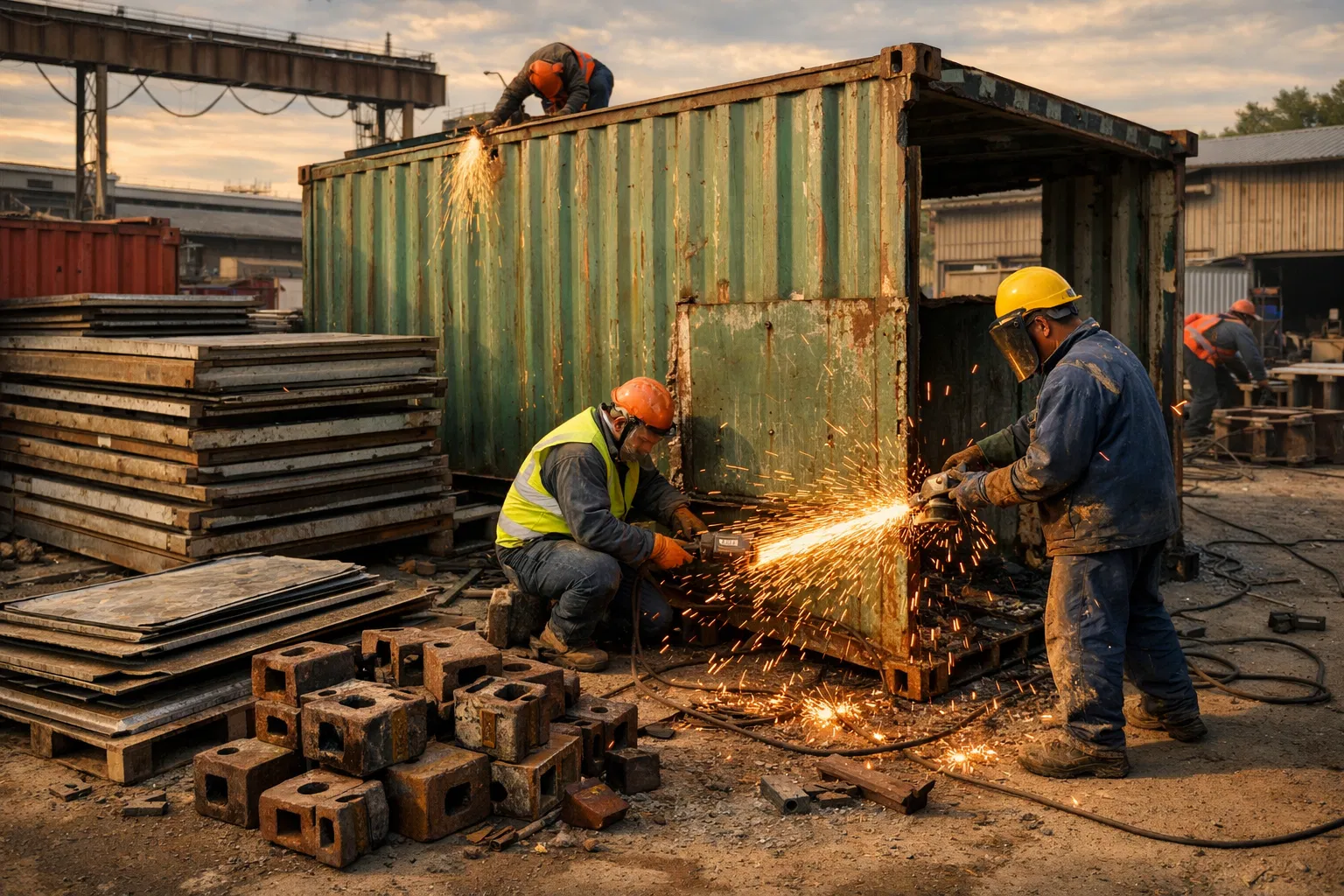
Container Sourcing & Assessment
We partner with major shipping lines — Maersk, MSC, CMA CGM — to acquire containers at end-of-service. Each container undergoes a structural assessment to determine which parts are suitable for furniture-making versus recycling.
- Visual inspection for structural integrity
- Hazardous material testing (lead paint, asbestos)
- Documentation of container history and origin
- Photography of unique surface characteristics
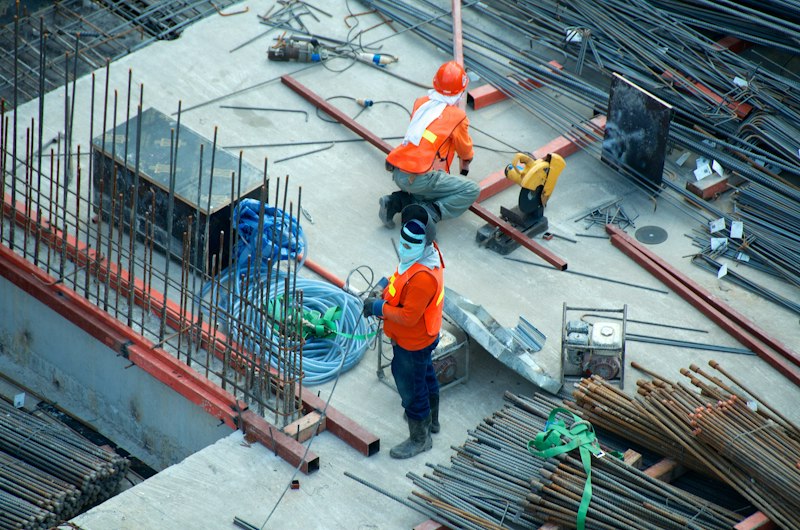
Careful Deconstruction
Our team of skilled metalworkers carefully disassembles each container using plasma cutters and angle grinders. The goal is preservation — we cut along original weld lines to maintain the structural integrity of each panel.
- Plasma cutting along original seam lines
- Preservation of original paint and patina
- Cataloguing each panel with origin data
- Sorting by material type and condition

Material Grading & Design
Each salvaged piece is graded for structural integrity, surface character, and aesthetic potential. Our designers then create furniture concepts that celebrate — rather than hide — the material's industrial history.
- Structural load testing for furniture use
- Surface grading: A (pristine) to C (heavily patinated)
- Design matching: pairing materials with furniture concepts
- Customer preview of materials before crafting
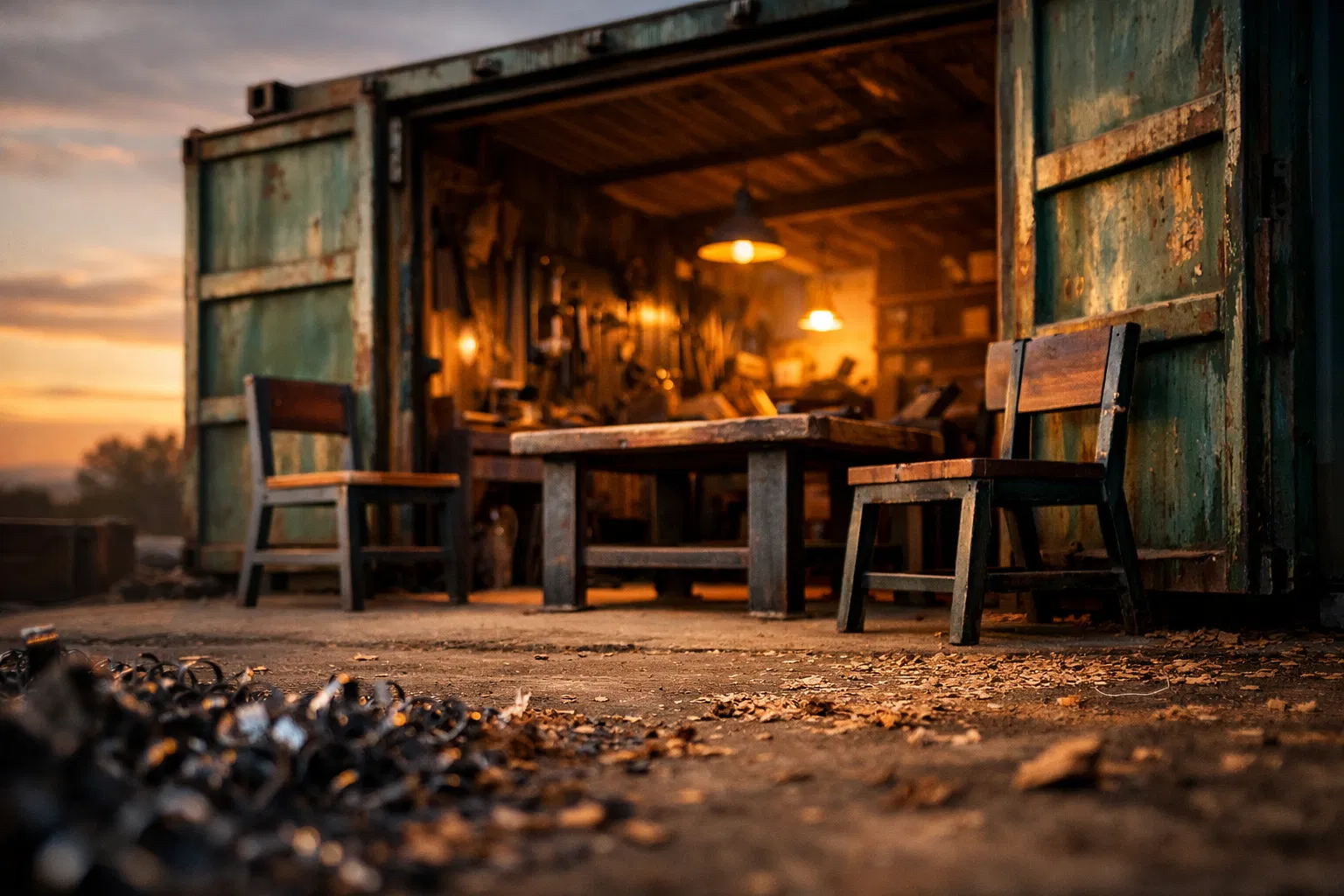
Artisan Crafting
Our Rotterdam workshop combines traditional metalworking with contemporary furniture design. Certified welders join container steel with reclaimed wood, creating pieces that are structurally sound and visually distinctive.
- MIG and TIG welding for precise joints
- Hand-finishing to preserve original patina
- Wood joinery with reclaimed hardwoods
- Quality control at each fabrication stage
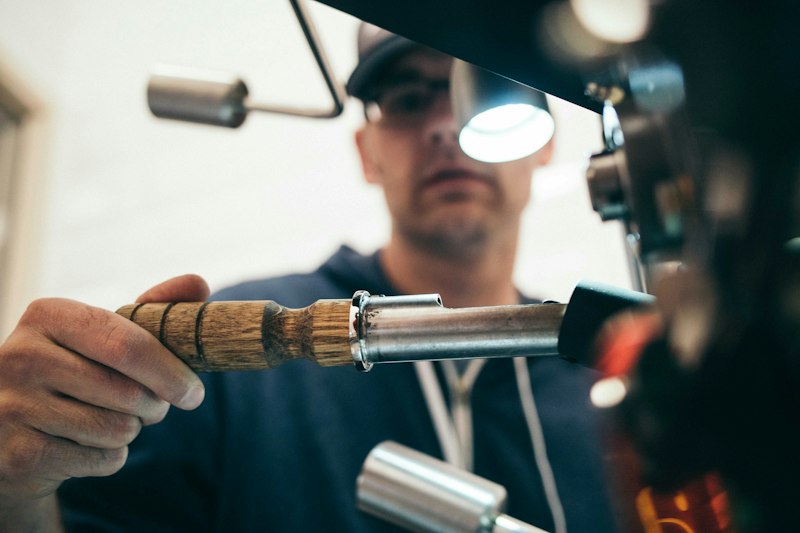
Finishing & Treatment
Rather than painting over the container's history, we apply clear protective coatings that preserve the authentic surface character. Wood elements receive food-safe oil treatments. All finishes are water-based and low-VOC.
- Clear matte lacquer on steel surfaces
- Linseed oil treatment for wood elements
- Anti-rust sealant for outdoor pieces
- Final quality inspection and photography

Certification & Delivery
Every piece ships with a Certificate of Origin documenting which container it came from, its shipping history, and the craftsperson who made it. We use carbon-neutral freight for all European deliveries.
- Certificate of Origin with container history
- Craftsperson signature and date
- Care and maintenance guide
- Carbon-neutral freight packaging